ZEVO Blog


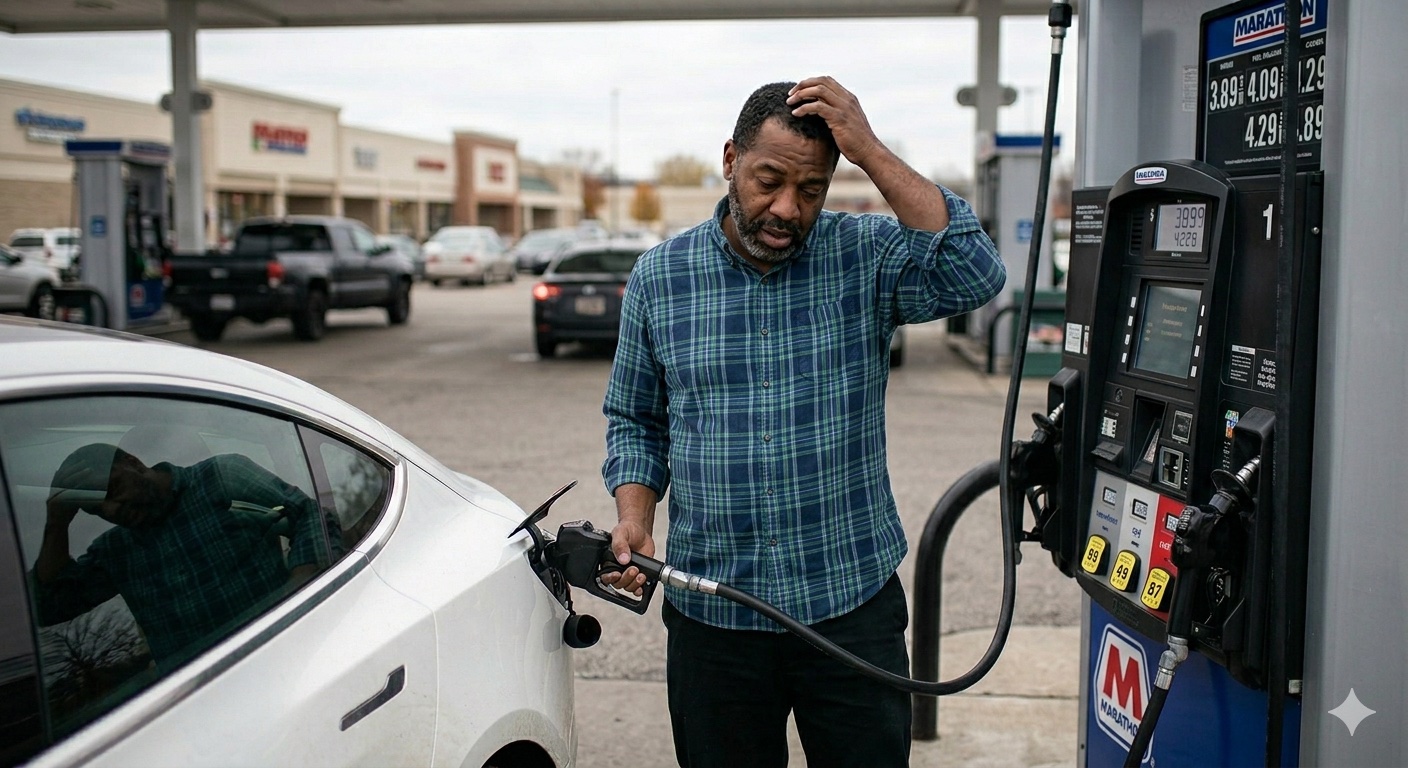
If you've been doing rideshare or delivery driving lately, you already know the feeling. You pull out of the parking lot, glance at the gas gauge, and do the mental math — again. Fill-up. Subtract that from your take-home. Wonder if it's worth it.
You're not alone. Rideshare drivers across the country are saying they're "on the brink of quitting" — not because of the apps, not because of passengers, but because they literally can't afford to fill up. The frustration is completely real, and the cause isn't random. It's structural.
The problem isn't the gig economy. The problem is the gas. And you don't have to keep paying it.
───
Why Gas Prices Aren't Coming Down Anytime Soon
This isn't a blip. The current run-up in gas prices is being driven by something bigger than a typical supply squeeze.
Tensions in the Middle East — specifically around the Strait of Hormuz — are putting pressure on global oil supply. The Strait of Hormuz is the single most important chokepoint in the world's oil infrastructure. About 20% of all global oil passes through it. When that region gets unstable, every driver in America feels it at the pump — whether they're paying attention to international news or not.
The result: national gas prices above $4/gallon, and analysts don't see a quick reversal. This isn't a temporary thing to wait out. For drivers, it's a recurring tax on every mile you work.
───
The Fuel Cost You Don't Think About
Every driver knows the feeling — gas prices spike, and suddenly the math on your week just got worse. You didn't change anything about how you work. The pump did.
EV drivers don't have that problem.
Electricity prices are stable. They don't swing 40 cents overnight because of a refinery outage or a headline out of the Middle East. When you're running on electric, your cost-per-mile is predictable — and predictable means you can actually plan.
For drivers grinding out long days, that consistency is worth real money. Not because the savings are always dramatic, but because the volatility is gone. You know what your week costs. You keep more of what you earn. And you stop subsidizing an industry that's been picking your pocket every time you pull up to a pump.
───
So What Is ZEVO, Exactly?
ZEVO is a peer-to-peer EV rental marketplace — think of it like the Airbnb of electric vehicles. Hosts who own EVs list them on the platform. Drivers rent them for rideshare, delivery, or personal use.
What that means for you as a driver:
• No gas bill. Electric charging is dramatically cheaper than filling up — and with gas where it is right now, the gap keeps growing.
• No long-term commitment. Rent an EV for a week, a month, or longer. You're not locked into a car payment.
• No buying required. Getting into an EV doesn't have to mean buying one. You can start tomorrow.
• Access to modern vehicles. The ZEVO fleet has over 2,000 vehicles, with around 100 new drivers joining every day.
The people still grinding through $5 fill-ups are paying a tax they don't have to pay. ZEVO exists to give drivers a practical on-ramp to a better equation — without needing to own a Tesla or wait for things to change.
The math already works. The question is whether you want in.
Check out ZEVO at zevo.com and see what's available in your area.
───
Sources: CNN/ABC News (driver fuel crisis), AAA/GasBuddy (national gas prices), EVtech.news (global EV tipping point), Electrek (NYC fast charger deployment), Transport & Environment (EV vs. diesel fleet costs), Reuters (rideshare driver fuel relief program)
