ZEVO Blog


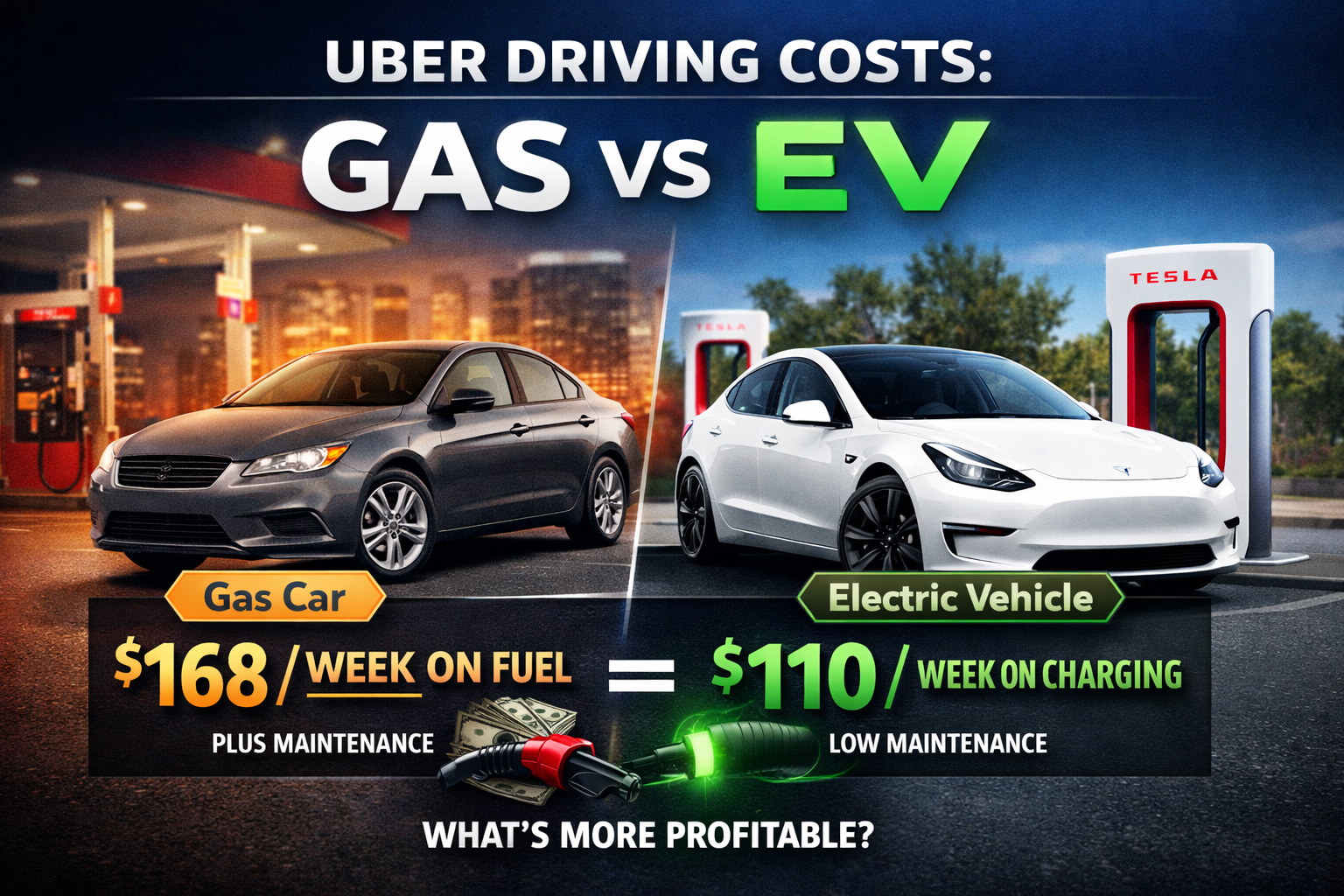
If you’re driving for Uber or thinking about it, the only question that matters is simple:
Which setup actually leaves you with more money at the end of the week?
Gas cars feel familiar. EVs feel uncertain. But once you break it down with real numbers, the decision becomes a lot clearer.
Let’s walk through it using realistic assumptions based on how drivers actually operate.
To make this fair, we’ll use a typical ZEVO-style driver profile:
This is where the economics really start to matter.
👉 Weekly Gas cost: ~$168 per week
This is a realistic number. Not best-case. Not worst-case.
Now let’s look at EVs.
Most articles lowball this. We won’t.
Based on actual ZEVO data from usage:
This reflects real high-mileage drivers using Tesla’s network in markets like Texas and California.
Charging cost isn’t fixed. It depends heavily on when you charge.
In Texas, most Tesla Supercharging during peak hours, roughly 9am to midnight, averages around:
That’s where most drivers land if they’re charging throughout the day.
But if you shift your charging to off-peak hours, midnight to 9am, rates drop significantly. In many cases, your cost can be cut nearly in half.
If you’re charging mostly during peak hours, you’ll typically be around the ZEVO average:
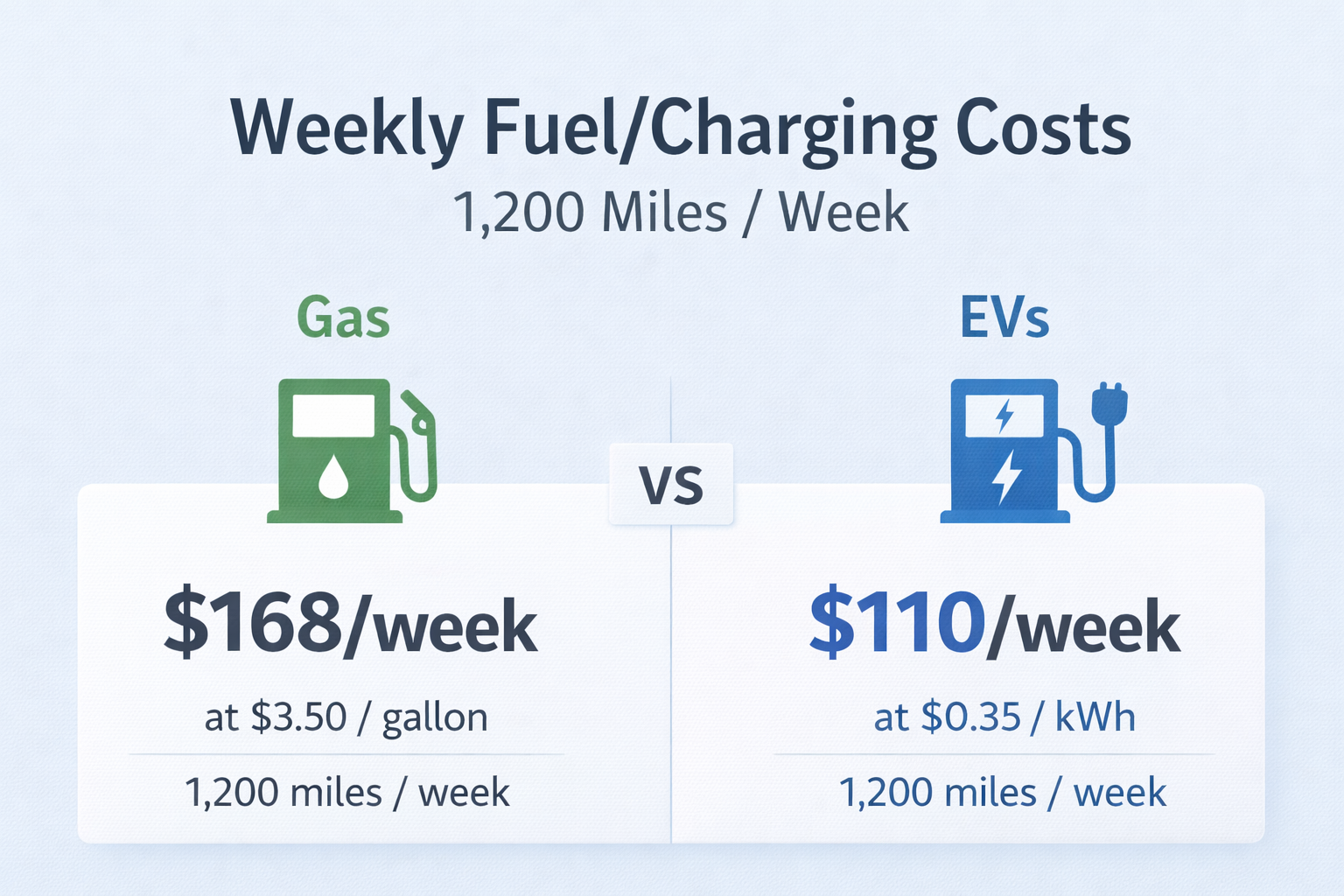
👉 ~$110 per week
But if you consistently charge during off-peak hours:
👉 Your weekly cost can drop closer to $70–$90
At $3.50 gas and 1,200 miles per week, a gas driver is spending about:
👉 ~$168 per week on fuel
That means:
Gas prices are fixed. You pay whatever the pump says.
EV charging gives you control.
If you’re intentional about when you charge, you’re not just saving money, you’re actively increasing your weekly profit without driving more hours.
This fits cleanly into the article, adds local relevance, and gives readers something actionable without breaking flow.
If you stop at fuel, you’re missing the bigger picture.
Gas vehicles come with:
EVs eliminate or reduce most of this.
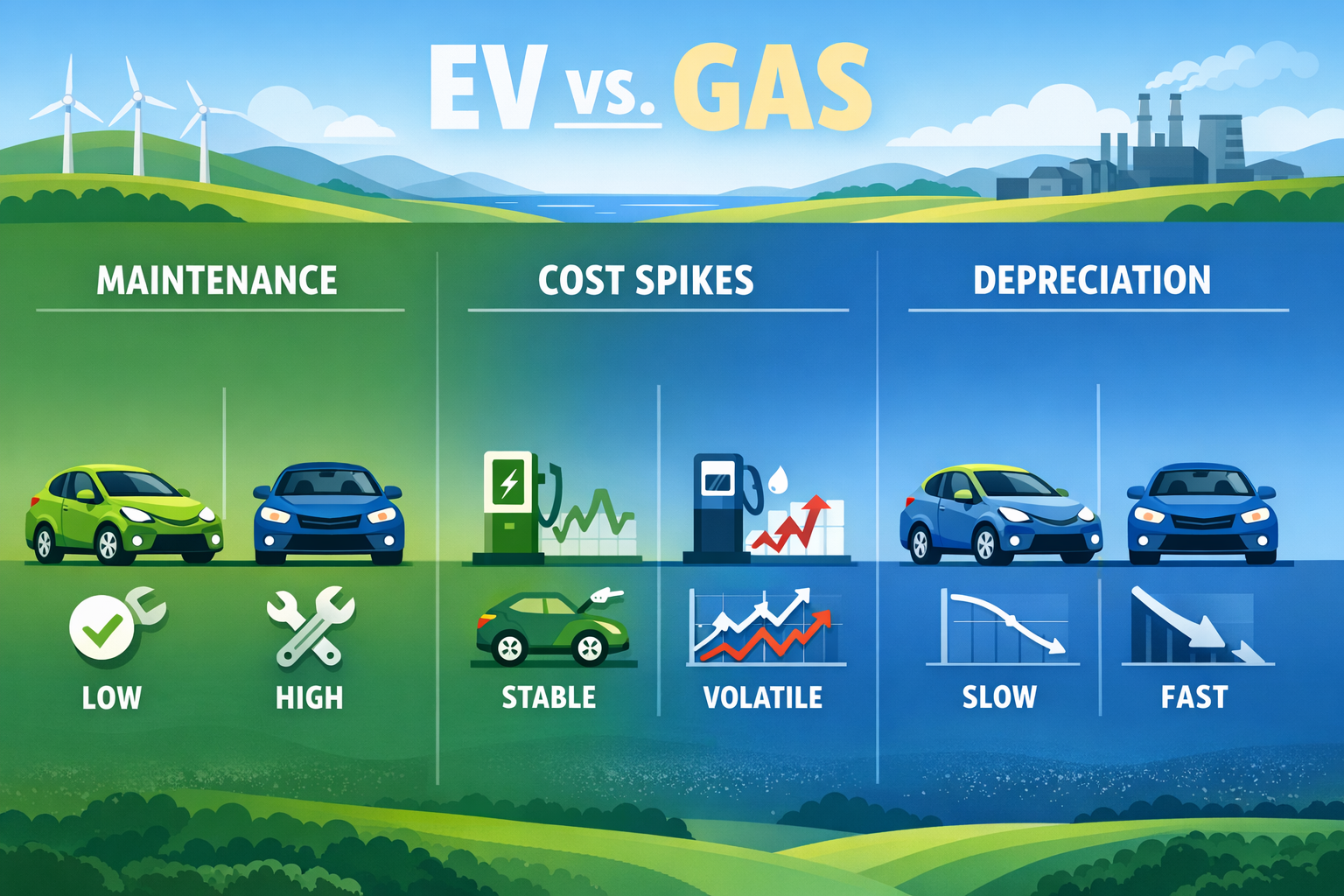
Studies consistently show EVs have significantly lower maintenance costs over time, largely due to fewer moving parts and no engine system.
Your costs won’t look like this:
$168, $168, $168…
They’ll look like:
$120… $140… $900 (repair)… $160…
That volatility matters when you depend on driving for income.
EVs are much more predictable week to week.
If you own your vehicle and drive 1,200 miles a week:
Most drivers don’t factor this in, but it’s one of the largest real costs.
With a rental model:
👉 Total: ~$360–$470/week
👉 Total: ~$500–$610/week
Because weekly cost isn’t the full picture.
They compare:
Gas vs charging
Instead of:
Total cost of ownership vs total cost of access
That’s the real shift happening.
Driving for Uber used to mean:
“I need to own a car to make money.”
Now it’s:
“I need access to the right car, at the right cost, for the hours I want to drive.”
That’s a completely different model.
If you’re driving full-time, the question isn’t:
“Is EV cheaper than gas?”
It’s:
“Which setup gives me the most stable, predictable income with the least risk?”
At scale, EVs start to win that equation.
Not because they’re trendy.
Because the numbers, over time, start working in your favor.
ZEVO gives you:
So you can focus on driving, not managing a car.
